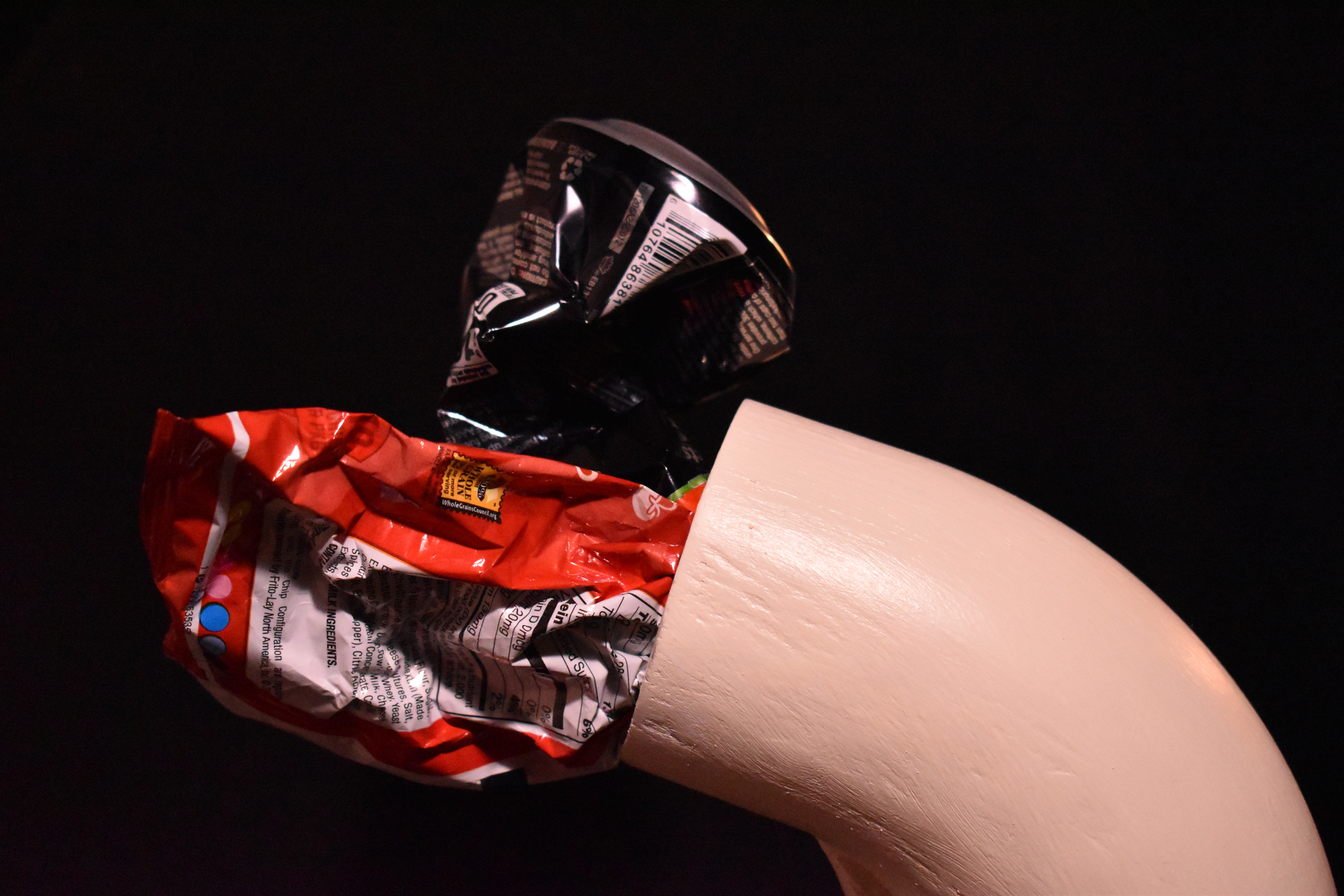
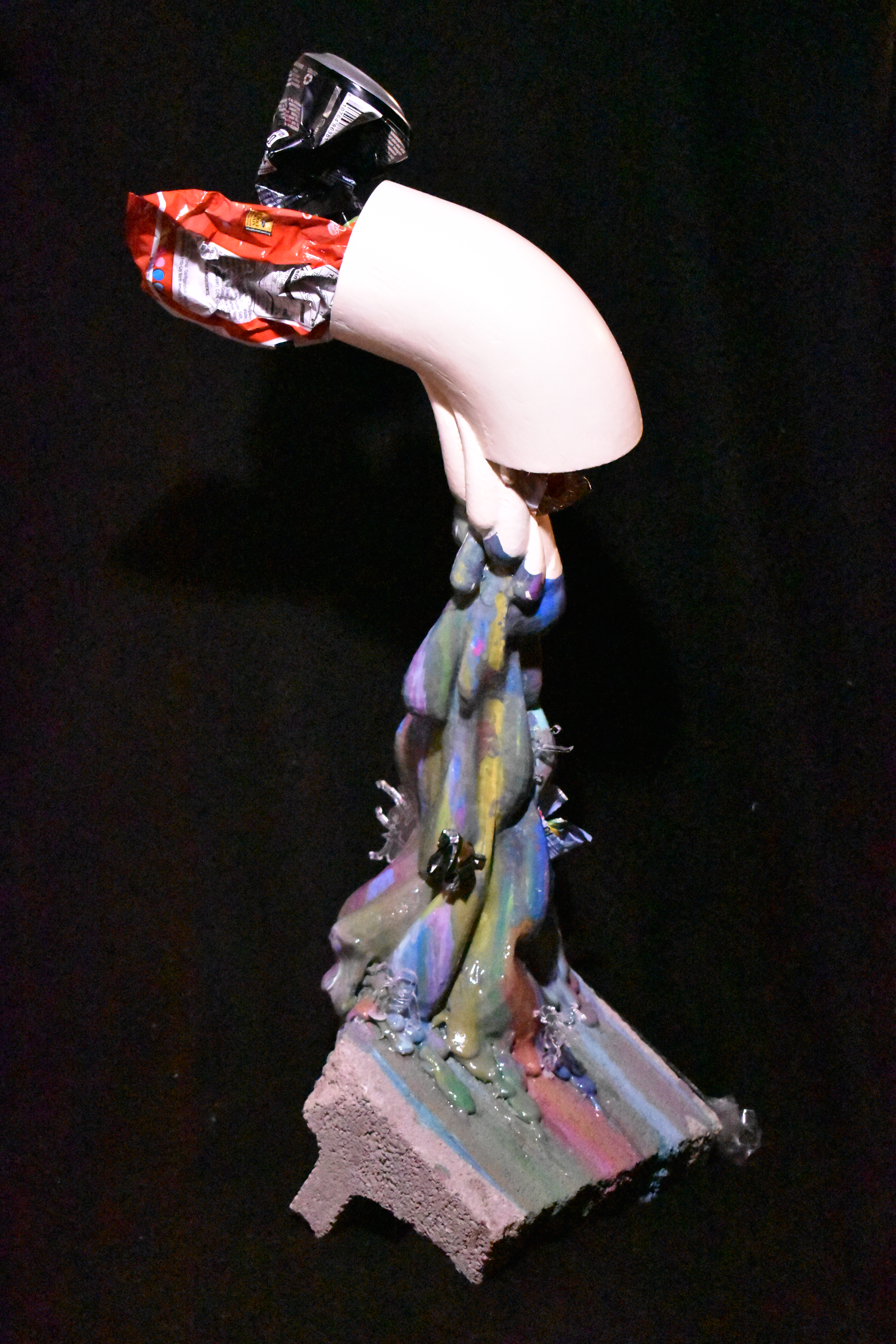
Fabricating this project and bringing it to life was definitely the part of the assignment that came most naturally to me. I first 3D printed the top “tube” portion of the sculpture. I then measured my piece of cinderblock and altered the bottom of the “blob” portion of the sculpture so it would fit. I then sanded, filled, and primed both 3D printed pieces. I positioned the tube and blob together, attached with superglue, and filled in gaps with air dry clay. Once secure, I then fixed the bottom of the blob to the cinderblock with superglue and hot glue. I decided to use the hot glue to add additional drips and blobs so the sculpture looked more cohesive.
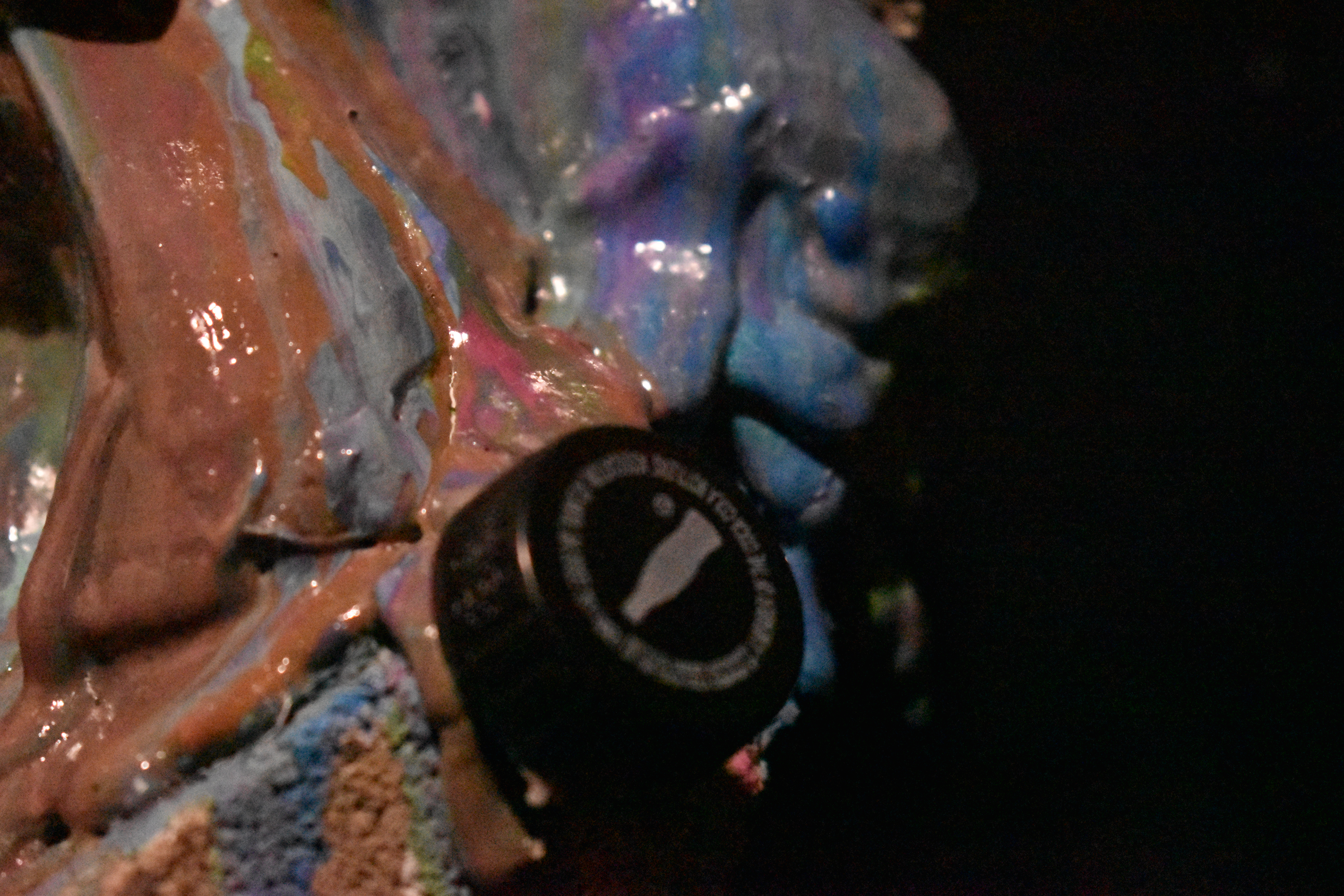
Once the form of the sculpture was complete, I thought about ways of getting it to look purposeful rather than collaged together with clay and hot glue. I decided I wanted to emulate an oil spill on the blob, as oils/greases are often present in road runoff and sewer overflows.
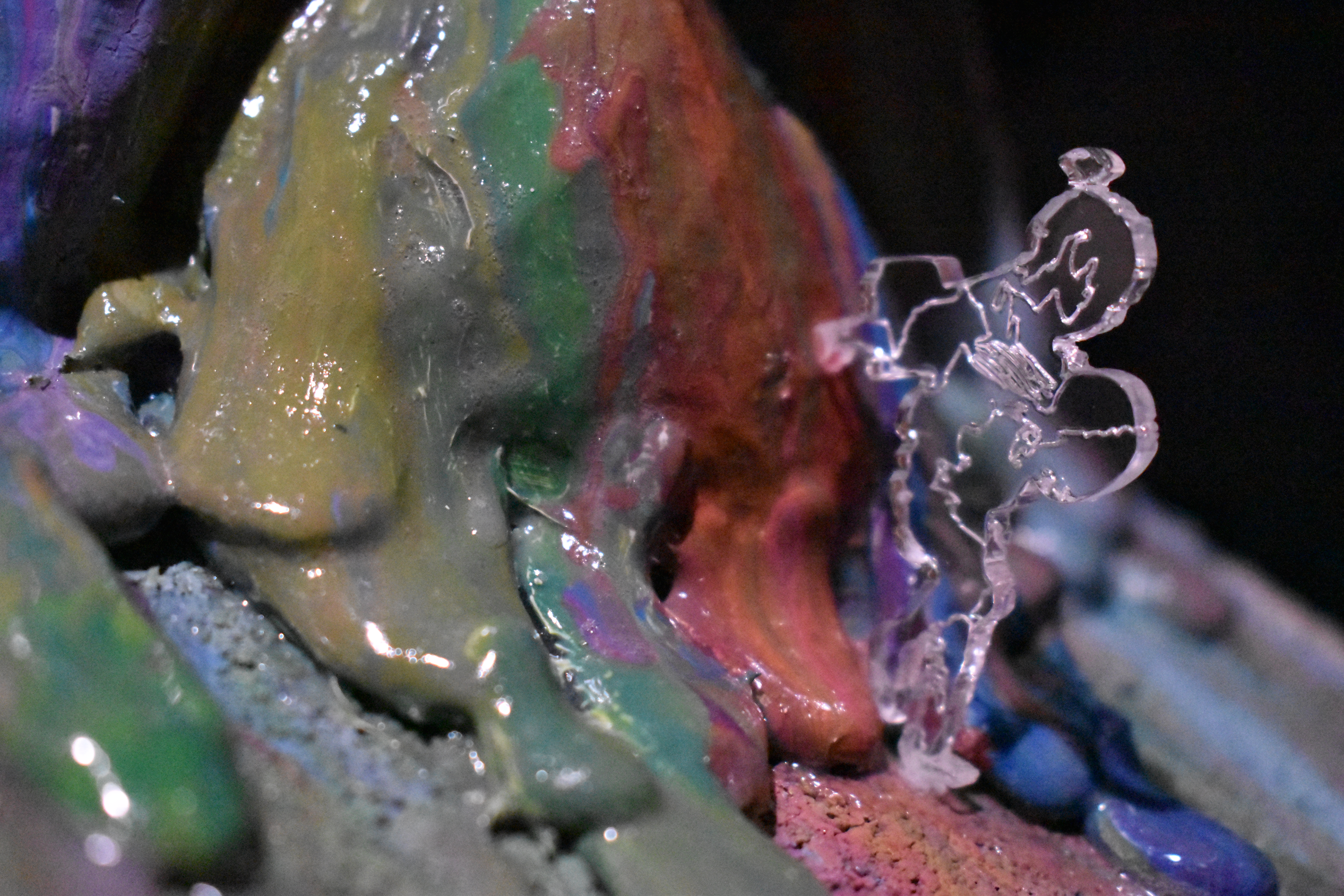
I am not a painter; so it took a while to figure out how to effectively emulate an oil spill. I chose to utilize watered down acrylic paints mixed in cups and poured over the surface of the sculpture. Covering the entire sculpture took multiple rounds of pouring, so keeping colors consistent was a bit difficult. I then decided to cover the blob (and the beginning “drips” attached to the tube) with multiple coats of high gloss varnish I had from a previous project. If I could go back and redo anything, however, I would likely spend the money on a better gloss, as the one I used kept leaving bubbles on the surface of the model. However, given the subject matter of the piece, I am not too hung up over it looking a little messy and rough around the edges.
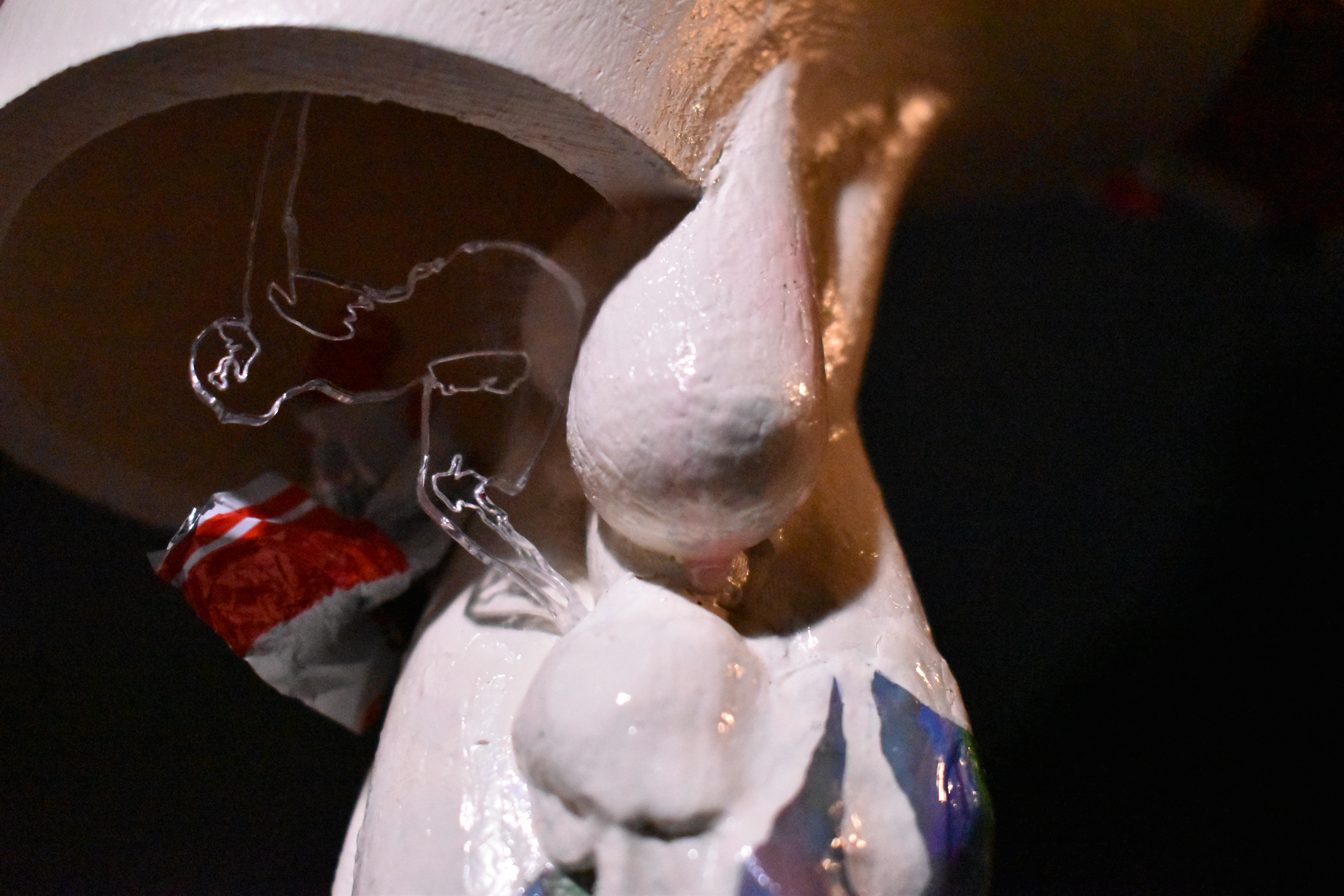
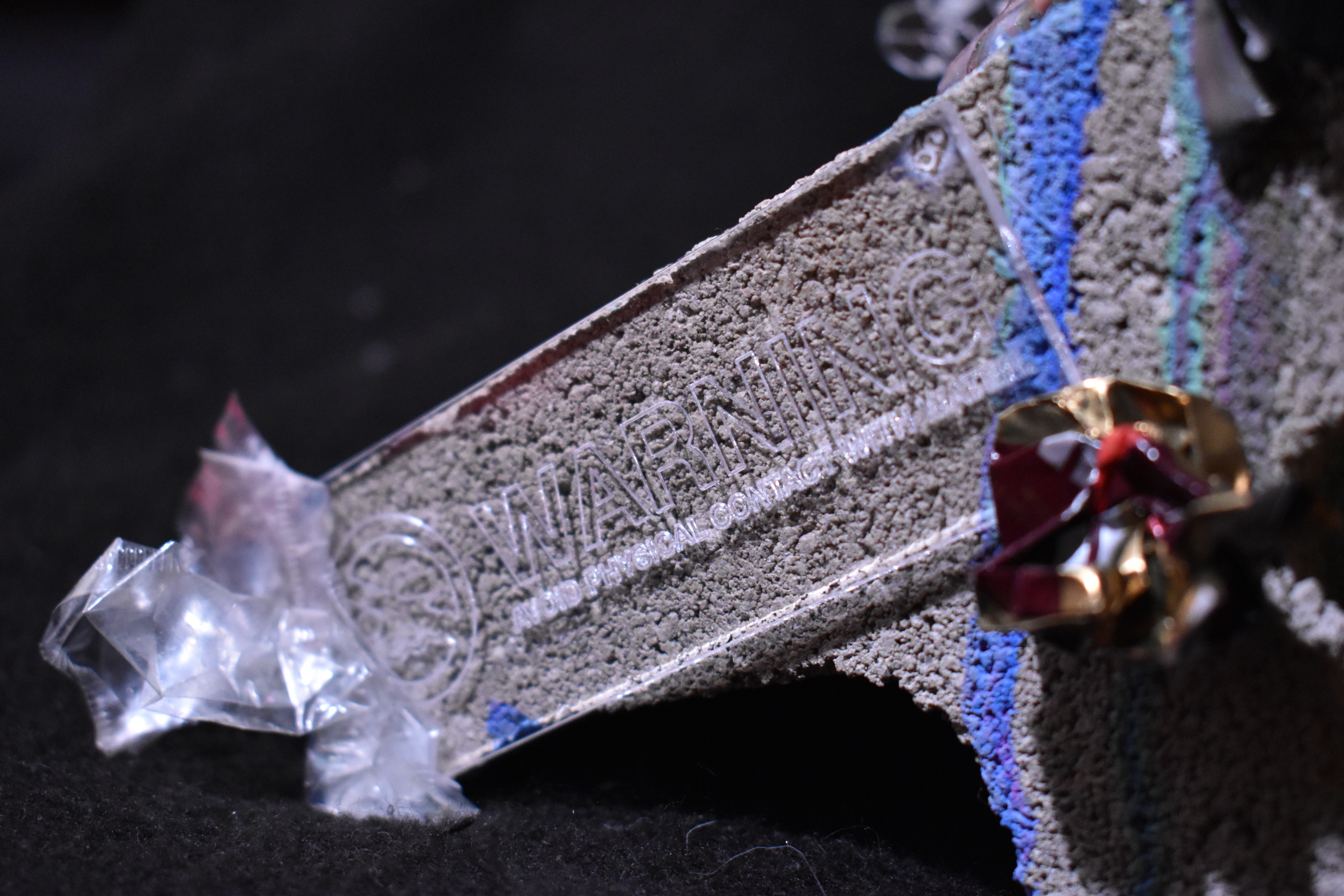
The final steps in fabrication were laser cutting the small scale people/warning sign as well as attaching the trash.
 avee oabel // art 3101